Key Takeaways:
- A unified digital marketing strategy workflow connects user research, content, and SEO into one repeatable system.
- Behavioral design thinking helps you produce content that matches how your audience actually reads, scans, and searches.
- Organic search visibility compounds faster when it is built into the workflow from the start, not added as an afterthought.
If your SEO team is doing one thing, your content team is doing another, and your UX designers are somewhere in a separate meeting, your organic search visibility is probably suffering for it. This is the reality for most growth-focused SMBs and tech startups. Each function optimizes in isolation, and the results reflect that disconnect clearly.
A well-structured digital marketing strategy workflow solves this by treating user experience, content strategy, and search performance as parts of the same system, not separate projects. When these disciplines work together from the first brief, the outcome is compounding: content that ranks because it genuinely serves the people searching for it.
This article walks through that end-to-end workflow, step by step, so your team can implement it as a repeatable operating process.
Why Siloed Marketing Teams Fail at Search
Most marketing teams divide their work by discipline. SEO handles keywords. Content handles writing. Design handles visuals. And rarely do they align early enough in the process to make a real difference.
The problem is that search engines, especially Google, have become very good at evaluating whether a page actually helps the person who landed on it. A high-ranking page is not just keyword-optimized; it is designed around what users need, how they behave, and what they do after they arrive.
When teams work in silos, pages get written for a keyword instead of a person. The result is content that ranks briefly, then drops, because engagement signals tell Google it was not truly the right answer. Dwell time falls. Bounce rates climb. Rankings follow.
An integrated marketing strategy starts at the overlap between disciplines. It does not ask “what keyword should this page target?” first. It asks, “what does our ideal user actually need at this stage of their journey?” That question changes everything that comes after it.
What an Integrated Digital Marketing Strategy Workflow Actually Looks Like
At its core, a digital marketing strategy workflow is a repeatable process that runs from audience research through content creation and into search performance measurement. Here is the high-level structure:
- Map the user journey
- Apply behavioral design thinking to content decisions
- Build organic search signals into content creation from the brief stage
- Optimize the customer experience based on real behavior data
- Measure, learn, and repeat
This is not a new theory. It is a reframing of what great marketing teams have always done, made systematic so it scales without losing quality.
Every stage depends on the one before it. Skipping user journey mapping means your behavioral insights have no foundation to build on. Skipping behavioral design means your content may be well-written but still misses how people actually think and scan when they search. The workflow only works when the chain is intact.
Step 1: Start With User Journey Mapping
User journey mapping is the process of documenting every stage a potential customer goes through, from first awareness to final conversion. For search purposes, it answers one critical question: what is this person searching for at each stage, and why?
This matters because search intent shifts dramatically across the journey. Someone in the awareness stage might search “how to improve website conversions.” Someone in the decision stage searches “best conversion rate optimization services for SaaS.” Same person, different moment, entirely different need. A digital service strategy built without this map will consistently target the wrong intent.

How to Build a User Journey Map for Search
Start with your best existing customers. Interview them, or mine your CRM and support tickets for recurring language and patterns. Look for the exact words they use, the problems they describe, and the questions they asked before they decided to buy.
Then organize these insights into journey stages: Awareness, Consideration, Decision, and Retention. For each stage, document the questions they are asking, the content format they prefer (article, comparison page, video, guide), and the emotional state they are in (curious, frustrated, ready to commit).
This map becomes the backbone of your entire content calendar. Every piece you create maps to a specific stage, a specific search intent, and a specific user need. That alignment is what makes your content rank and resonate at the same time.
Step 2: Apply Behavioral Design Thinking to Your Content
Behavioral design thinking borrows from cognitive psychology and UX research to understand how people make decisions, including how they scan, read, and engage with content on a screen.
Most users do not read an article from top to bottom. They scan. They look for the answer to their specific question. If they do not find it quickly, they leave. And that early exit signals to search engines that your content did not deliver what the searcher needed.
Applying behavioral design thinking to your editorial process means structuring content around how people actually behave, not how you hope they will read.

Key Behavioral Principles to Apply in Your Workflow
- Cognitive load reduction. Break up dense paragraphs. Use subheadings, bullets, and short sentences. Every additional word a reader must process is friction. Reduce it deliberately.
- Progressive disclosure. Lead with the direct answer, then elaborate. This is the inverted pyramid model, and it maps cleanly to how users scan: headline first, then the first sentence, then a subheading, then the opening of that section.
- Visual hierarchy. Bold key phrases. Use whitespace intentionally. Guide the eye toward your most important information. This is where strong UI UX digital marketing thinking becomes a direct search advantage, because Google treats dwell time and scroll depth as quality signals.
- Pattern recognition. Humans trust what feels familiar. A consistent structure across your blog posts trains your audience to engage more deeply because they know what to expect. Predictability is not boring; in content, it is a feature.
When behavioral design thinking is baked into your editorial process, you produce content that is simultaneously more readable for humans and better at sending positive engagement signals back to search engines. Those two things are not in tension. They reinforce each other.
Step 3: Build Organic Search Into the Workflow From Day One
Organic search visibility does not happen after content is written. It is built into the content from the first brief, and that distinction matters more than most teams realize.
This means your content brief should include, before a word is written: the primary keyword and its search intent, secondary and semantic keywords, the specific questions the content must answer (sourced from real search data), planned internal links to related pages, and a page structure that reflects behavioral design principles.
When SEO requirements live inside the brief, writers do not have to awkwardly insert keywords after the fact. The keywords appear naturally because the content was designed around the search query from the start. The result is copy that reads fluidly and ranks consistently.
The Role of Semantic Search in Your Workflow
Modern search engines use natural language processing to understand topics, not just isolated keywords. A page about SEO and user experience that genuinely covers page speed, navigation clarity, and content structure will rank for dozens of related searches, even if those exact phrases never appear verbatim.
This is why semantic completeness matters as much as keyword placement. Ask yourself: does this page cover the topic thoroughly enough that a reader would not need to search again afterward? If the answer is yes, you are building the kind of content that earns lasting rankings.
Topic clusters also play a central role here. When your pillar pages and cluster pages link to each other with intention, you signal topical authority to search engines. A consistent digital marketing strategy workflow maps these clusters in advance and builds them out systematically, rather than producing standalone pieces that never accumulate authority.
Step 4: Optimize the Customer Experience, Not Just the Page
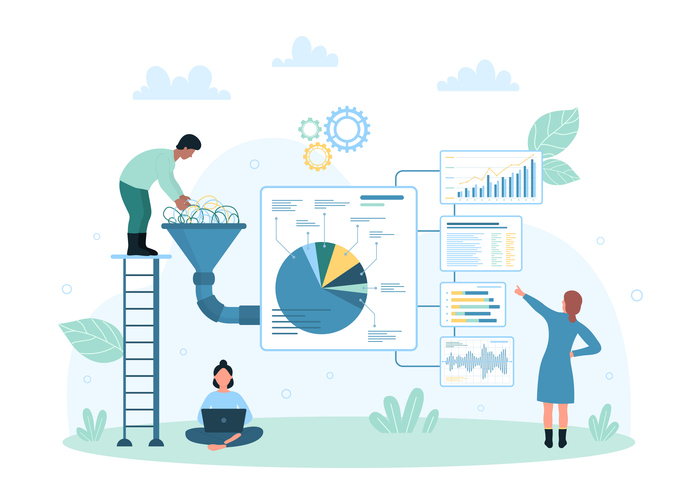
Customer experience optimization goes beyond what is on the page. It includes how fast the page loads, how easy it is to navigate on mobile, whether the call to action is visible and contextually relevant, and what happens in the moments after the click.
This is where marketing strategy, UX design, and conversion data converge. And this is exactly where many teams lose rankings they have already earned. They get the visitor to the page, but the experience breaks down somewhere between arrival and action. The conversion rate optimization services conversation cannot be separated from the search strategy conversation. They are the same conversation.
Here is a practical checklist for customer experience optimization within your workflow:
- Page speed: Core Web Vitals are a direct ranking signal. Every additional second of load time costs you both rankings and conversions simultaneously.
- Mobile experience: More than half of all searches happen on mobile devices. A page that works well on desktop but frustrates on mobile is at best half-optimized.
- On-page clarity: Does the user know within three seconds that they are in the right place? If the headline is ambiguous or buried, you are losing people before they start reading.
- CTA alignment: Does the call to action match the intent of the page? A post targeting an awareness-stage keyword should not lead with a hard “Buy Now.” Offer something low-friction that matches where the reader is in their journey.
When your integrated marketing strategy explicitly maps the customer experience alongside keyword targeting, these decisions get made intentionally rather than accidentally.
Making the Workflow Repeatable at Scale
The final step in an effective digital marketing strategy workflow is systematizing everything so it scales without losing quality or coherence.
This means building and maintaining a standardized content brief template that covers SEO requirements, behavioral design principles, and journey stage alignment in a single document. It means developing editorial guidelines that reflect your brand voice and structural expectations clearly enough that any writer can follow them. It means establishing a measurement cadence that ties organic traffic to conversion outcomes rather than just tracking rankings in isolation.
It also means scheduling quarterly user journey map reviews. Your audience’s needs evolve. New competitors emerge. Search intent shifts. The workflow is only as strong as its inputs, and those inputs need to stay current.
When this process becomes a standard operating procedure, every new piece of content benefits from the full stack of research, design thinking, and search strategy from day one. You stop producing content and hoping it performs. You start building a system that compounds over time.
The Competitive Advantage You Have Been Leaving on the Table
Most SMBs and startups are not losing on effort. They are losing on integration.
Their SEO team is producing keyword-optimized pages that do not convert. Their content team is producing well-written articles that do not rank. Their designers are building visually polished pages that organic search never surfaces. Each team is doing good work inside its own lane, and the results are still disappointing.
A unified digital marketing strategy workflow changes that equation entirely. When user journey mapping informs your keyword strategy, behavioral design thinking shapes your content structure, and organic search visibility is built in from brief to publish, you create assets that do all three jobs at once.
This is what sustainable search growth looks like. Not a shortcut, but a system. Not a campaign, but a compounding process that gets stronger the longer you run it.
Ready to Build a Workflow That Actually Drives Growth?
Studio Dakila helps marketing leaders at growth-focused SMBs and tech startups build integrated strategies that connect UX thinking, content, and organic search into one cohesive, repeatable system. If your current approach is siloed and your search results reflect that, it is time to change the process.
Frequently Asked Questions
A digital marketing strategy workflow is a repeatable process that connects audience research, content creation, UX design, and search optimization into one coordinated system. It ensures each discipline informs the others rather than operating independently.
User journey mapping reveals what your audience is searching for at each stage of the buying process, which helps you create content that matches real search intent. This alignment leads to stronger rankings because search engines reward content that genuinely answers the searcher’s question.
Behavioral design thinking applies principles from psychology and UX research to understand how users actually scan and engage with content online. Marketers use it to structure pages in ways that reduce friction, improve dwell time, and send stronger quality signals to search engines.
