
Key Takeaways:
- Philippine startups often lose customers to disconnected UX and conversion strategy, not weak marketing.
- Mapping the user journey before scaling campaigns closes the gap between traffic and revenue.
- A shared framework across marketing, design, and CRO turns startup digital marketing into a repeatable growth engine.
A founder in Manila spends four months and half the seed round on paid ads, SEO, and influencer partnerships. Traffic climbs. Signups barely move. This is the quiet failure mode of startup digital marketing in the Philippines: teams optimize for clicks while the product experience quietly repels the very users those clicks paid to bring in.
The real issue rarely shows up in a marketing report. It shows up in the gap between the marketing team, the product designers, and whoever owns conversion rate optimization, usually nobody in particular. Early-stage teams build these functions in silos, then wonder why growth stalls the moment the ad budget runs out.
This guide breaks down why that disconnect happens so often among Philippine startups, and lays out a practical, end-to-end framework for closing it before it costs another funding round.
The Real Disconnect Behind Failed Startup Digital Marketing
Ask ten early-stage founders in Metro Manila or Cebu why growth stalled, and most will point to budget, timing, or a competitor with deeper pockets. Few will mention the real culprit: a startup digital marketing function that operates disconnected from product and design decisions.
This is one of the most common Philippines startup challenges, and it rarely gets diagnosed correctly. A founder hires a freelance marketer or agency to run ads and manage SEO services, then hands the resulting leads to a product team that had no input into what those campaigns promised. The messaging says one thing. The onboarding flow delivers another. Users notice the gap immediately, even if they can’t name it.
The pattern repeats because most startups build their digital marketing strategy before they’ve mapped how a user actually moves through the product. Growth becomes a series of disconnected sprints instead of a coherent system, and every new channel added just amplifies the mismatch between what’s promised and what’s delivered.
When Marketing Drives Traffic, But UX Kills the Sale
Traffic is not the same as revenue, yet many campaigns are built as if it were. A startup can rank on page one, run flawless paid ads, and still convert at half the rate of a slower-growing competitor, because nobody looked at user experience optimization as part of the growth plan.
Here’s what that looks like in practice. A landing page loads fast and matches the ad copy. Then the signup form asks for eight fields before showing any value. Or the checkout flow buries the price until step three. None of this is a traffic problem. It is a UX design for conversions problem, and no amount of additional spend or link building strategies will fix it, because the leak happens after the click, not before it.
Startups that treat design and marketing as separate budgets, rather than one connected system, end up paying twice: once to acquire the visitor, and again when a competitor with a smoother experience wins the conversion instead.
The Missing Step: User Journey Mapping
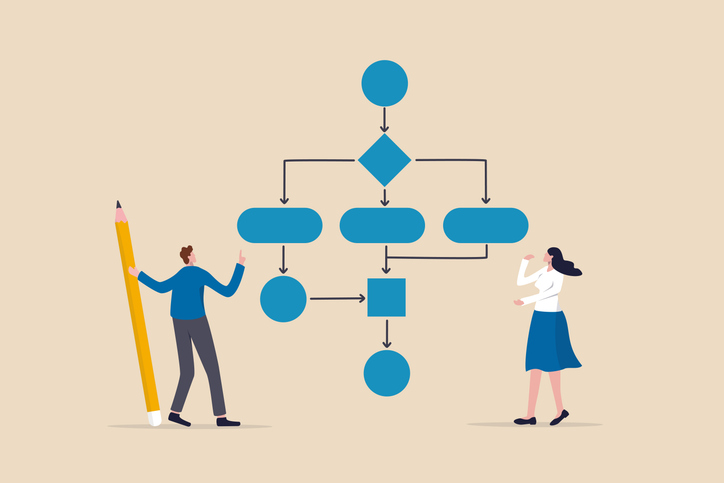
Most Philippine startups skip user journey mapping entirely, or they do it once during a pitch deck exercise and never touch it again. Without a living map of how a real user moves from first ad impression to paid conversion, marketing and design teams end up guessing at the same problem from opposite directions.
The result is predictable. Marketing optimizes the top of funnel because that’s what dashboards show clearly: impressions, clicks, cost per click. Meanwhile, the middle of the funnel, the part where a curious visitor decides whether to trust the product enough to sign up, gets almost no attention because it’s harder to measure and nobody owns it.
A Faster Way to Map the Journey
You don’t need a research team to fix this. A founder or product lead can sketch the journey in an afternoon by walking through the product as a brand-new user would, screen by screen, and writing down every point of friction, confusion, or unanswered question. Pair that with five real user interviews, and most startups will surface the same two or three blockers that have been quietly capping their conversion rate for months.
This is also where UX-driven SEO earns its keep. Search intent and user intent are the same signal viewed from two different angles. A page structured around what a searcher actually needs, rather than what a startup wants to say, tends to convert better and rank better at the same time.
Why CRO Gets Bolted On Instead of Built In
Conversion rate optimization has a reputation problem in the Philippine startup scene. Founders hear “CRO” and picture A/B testing tools that only make sense once you have tens of thousands of monthly visitors. So it gets shelved, treated as a later-stage nice-to-have instead of a habit built in from day one.
That’s backwards. CRO at the early stage isn’t about statistical significance. It’s about removing obvious friction before it compounds. A pricing page that confuses first-time visitors will confuse them whether you have 200 visitors a month or 20,000. Catching that early costs a design review. Catching it after a Series A raise costs a rebuild.
Small teams also underestimate how much internal busywork steals from this kind of review. Founders juggling growth, hiring, and fundraising rarely protect the calendar hours needed to actually watch a user struggle through a signup flow. Tools like Reclaim AI can help by automatically defending focus blocks for exactly this kind of unglamorous but high-leverage work, so it doesn’t keep sliding to “next sprint” indefinitely.

The Local Trust Signals Philippine Startups Overlook
Philippine users have specific trust signals that generic UX advice, most of it written for US or European markets, doesn’t account for. A checkout page that only accepts international credit cards loses buyers instantly in a market where GCash, Maya, and over-the-counter payment options are often the default, not the backup.
Language matters too. A landing page written entirely in polished, formal English can feel distant to a Cebu-based small business owner who would respond better to a more conversational, code-switched tone. None of this shows up in a generic conversion checklist, which is why so many startups importing playbooks from abroad plateau faster than they expect.
This is also where local SEO services matter more than most early-stage teams realize. Ranking for “near me” and city-specific searches isn’t just a visibility play, it’s a trust play. A business that shows up correctly in Google Maps, with accurate hours, real reviews, and a local phone number, signals legitimacy to a Filipino buyer in a way a slick but anonymous landing page can’t replicate on its own.
An End-to-End Framework to Align Marketing, UX, and CRO
Fixing the disconnect between growth and product doesn’t require a big team. It requires a shared framework that marketing, design, and whoever owns conversion sit around together, even if that’s one founder wearing three hats.
Step 1: Audit the Full Funnel
Start by mapping every channel bringing in traffic against every step a visitor takes afterward. Most startups can name their channels instantly: ads, organic, referrals. Few can say with confidence where visitors actually drop off between the ad click and the signed-up account. Pull the numbers before assuming where the leak is.
Step 2: Map the User Journey
Revisit the exercise from earlier in this guide, but formalize it. Document the journey stage by stage: awareness, consideration, decision, onboarding, retention, and note what each stage promises versus what it actually delivers. This becomes the shared reference point that keeps marketing copy, design decisions, and CRO experiments pointed at the same target.
Step 3: Design for the Decision, Not Just the Click
Every page exists to move a visitor toward one decision. Strip anything that doesn’t support that decision. This is where a UX SEO and CRO Agency earns its value for a resource-constrained startup: an outside team that already thinks in terms of search visibility, interface clarity, and conversion in the same breath, rather than treating them as three separate hires.
Step 4: Test Before You Scale
Before pouring more budget into a channel, test the page it points to with a small, cheap sample. A five-person usability walkthrough or a week of heatmap data will surface more actionable insight than another round of ad creative iterations.
Step 5: Review on a Fixed Cadence
Set a recurring, non-negotiable review, monthly is usually enough at the early stage, where marketing, design, and whoever owns growth look at funnel data together. Automation tools help here too. Workflow platforms like Dify can pull performance data and flag anomalies automatically, so the review starts with insight instead of a manual data pull. The same logic applies operationally: a startup that uses automation to streamline client onboarding frees up the hours needed to run this review consistently instead of letting it slip every quarter.
For startups that would rather hand this whole system to a partner instead of building it in-house, working with a design-informed SEO and conversion rate optimization agency solves the coordination problem directly: one team, one shared roadmap, no translation loss between the people driving traffic and the people shaping the experience that traffic lands on.
What It Looks Like When Startups Get This Right
Picture a Manila-based B2B SaaS startup that spent its first year running textbook startup digital marketing: paid search, LinkedIn outreach, a content calendar. Signups trickled in, but nearly 70 percent abandoned the onboarding flow before activating the product.
The fix wasn’t a bigger ad budget. It was a two-week audit that mapped the actual user journey, found that onboarding demanded a credit card before showing any value, and redesigned the first five minutes of the product experience around a single, low-friction “aha moment.” Conversion from signup to activation nearly doubled within a month, without touching the marketing spend at all.
This is the pattern behind most successful startup digital marketing today, in the Philippines and elsewhere. The channel matters far less than most founders assume. The experience the channel leads to is what decides whether that investment pays off.
Turning Startup Digital Marketing Into a System, Not a Guessing Game
None of this requires a large team or a large budget. It requires treating marketing, UX, and conversion as one connected system instead of three separate line items competing for the same limited resources. The startups that get this right in the Philippines aren’t necessarily the ones spending the most on ads. They’re the ones who mapped the user journey early, removed friction before scaling spend, and built a review cadence that catches problems before a bad quarter forces the issue.
If your team is still treating startup digital marketing as something that happens after the product is built, rather than something designed alongside it, that gap is worth closing now, while it’s still cheap to fix.
Ready to Close the Gap Between Your Marketing and Your Conversions?
Studio Dakila works with early-stage and scaling Philippine startups to align digital marketing, UX design, and conversion strategy under one roadmap instead of three disconnected ones.
Book a free consultation and get a clear picture of exactly where your funnel is leaking, and what to fix first.
Frequently Asked Questions
Most Philippine startups treat marketing, UX, and conversion rate optimization as separate functions instead of one connected system, so campaigns bring in traffic the product experience isn’t designed to convert.
Start with user journey mapping instead of a bigger ad budget. Walking through the product as a first-time user usually surfaces the same two or three blockers that have been capping conversions for months.
Yes. Fixing obvious friction points early costs a design review, while catching the same problems after scaling usually costs a full rebuild.
