
Key Takeaways:
- Behavioral design thinking aligns your digital marketing strategy with how real people actually make decisions.
- Connecting user journey mapping with organic search visibility removes friction at every stage of the funnel.
- A behavior-led integrated marketing workflow turns disconnected tactics into a unified, measurable system.
Your marketing team is checking all the boxes. Blog posts go live on schedule. Ads run. Emails go out. Yet your conversion rate has not moved in months.
For most marketing leaders and founders at growing SMBs and startups, the problem is not effort. It is alignment. Each tactic works in isolation, but none of them are built around how your customers actually think, browse, hesitate, and decide. That disconnect is exactly where behavioral design thinking becomes the missing piece in your digital marketing strategy.
When you apply behavioral science to your marketing decisions, your content shows up for the right searches, your pages stop leaking visitors, and your campaigns start working together as a coordinated system. This article breaks down how that works and what it looks like in practice for teams who are ready to stop guessing and start growing.
What Is Behavioral Design Thinking?
Behavioral design thinking is the practice of building marketing experiences, messages, and workflows around how people actually behave, not how you assume they will.
It draws from behavioral economics (including Nobel-winning research by Daniel Kahneman on fast and slow decision-making), cognitive load theory, and UX research to inform decisions at every stage of a campaign. Instead of leading with what you want to say, you start by mapping what your audience feels, needs, and resists at each point in their journey.
For marketing teams, this creates a disciplined way of asking better questions before building: Why would someone click this CTA? What hesitation are we not addressing? What word choice builds trust, and what triggers doubt in this context?
Applied consistently across your channels, behavioral design thinking gives your digital marketing strategy a coherent foundation, one where content, design, and organic search all serve the same psychological goal.

How Behavioral Design Thinking Shapes User Journey Mapping
User journey mapping is one of the most underused tools in a marketer’s toolkit. Most teams build one, present it in a kickoff meeting, and rarely look at it again. Behavioral design thinking changes that by turning a static document into a living diagnostic tool that actively informs your digital marketing strategy.
Focus on Decision Moments, Not Just Funnel Stages
Traditional journey maps are organized by stage: Awareness, Consideration, Decision. Behavioral mapping goes deeper, identifying the specific decision moments where a prospect chooses to continue or drop off entirely.
Every one of those moments carries a cognitive load. Is your messaging reducing that load or adding to it?
Consider a founder landing on your pricing page after reading a blog post. They are not passively sitting in the “Consideration” stage. They are in a micro-moment of trust assessment: “Is this team worth paying?” If your copy and design do not address that specific question immediately, they leave.
A conversion optimization lens applied at this exact moment asks: what visual signal, headline, or piece of social proof turns hesitation into forward movement? The answer shapes page design, CTA placement, and the specific words you use in the section that matters most.
Map Emotional States, Not Just Actions
Behavioral design thinking also requires that you map the emotional state behind each action, not just the action itself. HubSpot’s research consistently shows that emotional alignment between content and buyer intent is one of the strongest predictors of engagement and conversion across both B2B and B2C contexts.
This means your user journey map should not just note “visits pricing page.” It should note “feels uncertain about ROI at this stage” and then design the page to resolve that specific feeling. That level of audience empathy is what separates brands that convert from those that accumulate traffic without results.

Behavioral Design and Organic Search Visibility
Most content teams treat organic search visibility as a keyword problem: find a term, write about it, and wait to rank. Behavioral design thinking reframes the challenge entirely, and that shift has a direct impact on your overall digital marketing strategy.
Google’s systems are increasingly sophisticated at identifying whether content genuinely satisfies real human intent. Behavioral signals, including dwell time, scroll depth, and click-through rate, feed directly into how your pages perform over time. If your content is not designed around how people actually process information, those signals will work against you, regardless of how well-optimized your metadata is.
Write for How People Actually Read
People do not read web content linearly. They scan headers. They jump to the sentence that directly answers the question they arrived with. The inverted pyramid style of writing, which places the most important answer first and elaborates afterward, is rooted in cognitive psychology. It respects limited attention spans, and it is exactly the format that Google AI Overviews and featured snippets consistently favor.
A tool like Rank Prompt helps marketers structure AI-assisted content briefs around this behavior-forward format. Instead of producing articles that merely include keywords, your team starts producing answers that match real search patterns and satisfy real intent.
The Visual Layer of Organic Performance
Behavioral signals do not begin and end with copy. Color psychology plays a measurable role in how long visitors stay on a page and whether they take action. The visual hierarchy of your layout, the contrast of your CTA buttons, and the spacing between your headers all influence whether someone reads further or bounces within seconds.
This is why partnering with a UI UX design agency that understands behavioral principles is a practical SEO investment, not just a design preference. Better-designed pages produce stronger behavioral signals, and stronger behavioral signals improve organic search visibility over time. The two disciplines are not separate. They are the same goal viewed from different angles.
Building an Integrated Marketing Workflow
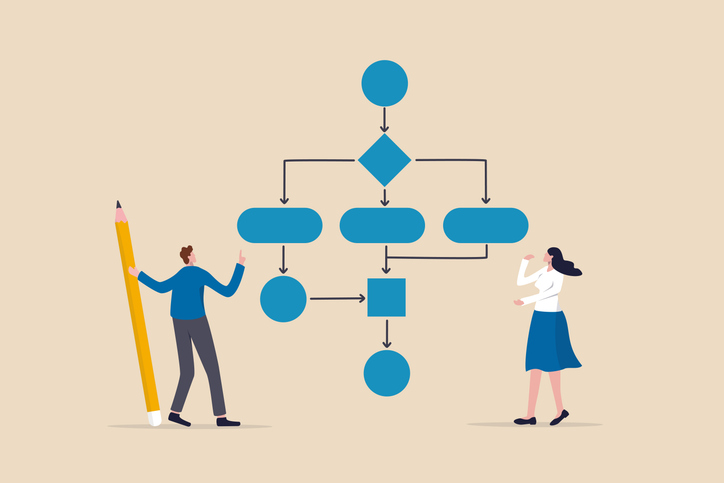
The most common gap in SMB digital marketing strategies is not a missing tactic. It is missing integration. Content teams, paid media teams, social teams, and email teams each optimize for separate channel metrics. Nobody owns the complete behavioral arc of the customer journey.
An integrated marketing workflow built on behavioral design thinking solves that by giving every channel a shared framework for understanding the customer. Here is what that looks like in practice.
Align SEO, Content, and Conversion Around One Behavioral Insight
Your SEO research should not just deliver keyword targets. It should deliver behavioral context: “People searching this query are typically in a research phase and tend to exit pages that lead with product features before establishing credibility.”
That single insight changes what your content team writes and what your conversion optimization work prioritizes on the landing page. When SEO, content, and CRO share a behavioral lens, you stop producing content that ranks but fails to convert. Your digital marketing strategy becomes a closed loop rather than a set of parallel, disconnected tracks.
This approach is especially critical when building marketing products for small business teams with limited headcount. When every piece of content connects to a behavioral hypothesis, you reduce wasted effort and shorten the feedback loop between publishing and improving.
Protect the Strategic Work
An integrated marketing workflow only stays integrated if the people building it have protected time to think clearly. Reclaim AI is valuable for exactly this reason: it automatically schedules deep work blocks for strategists and writers, so planning sessions and creative work do not get crowded out by back-to-back meetings.
Strategy is the part of marketing that most often gets squeezed by execution pressure. Protecting it structurally is, in itself, a behavioral design decision about how your team works.
Build Distribution Into the Workflow
A behavior-led integrated marketing workflow also requires a systematic approach to content distribution. A link building service like fatjoe supports the off-page side of organic search visibility without creating bottlenecks in your internal content process. When outreach is handled systematically and externally, your team stays focused on strategy and quality rather than manual prospecting.
For email marketing specifically, a list hygiene tool like Bouncer ensures your behavioral data (open rates, click patterns, unsubscribes) reflects real engagement from real subscribers. Clean data means accurate insights, and accurate insights mean better-informed decisions about what to test and what to scale across your digital marketing strategy.
Tools That Support a Behavioral Design Approach
You do not need an enterprise budget to apply behavioral design thinking to your digital marketing strategy. The right tools, used within a behavioral framework, amplify your existing strategy rather than replacing it.
- Rank Prompt helps you build AI-assisted content briefs structured around real user intent and behavioral search patterns. It keeps psychology in the planning phase, not just keyword targeting, so every piece of content starts with a behavioral question rather than a volume metric.
- HubSpot remains one of the most complete platforms for tracking behavioral signals across the full customer journey. Its CRM and marketing automation capabilities let you trigger communications based on actual user actions, rather than assumed funnel stages. This is what makes truly personalized marketing possible at scale.
- Reclaim AI protects the focused work time your team needs for strategic thinking. Without protected time, integrated marketing workflows tend to collapse back into reactive execution and last-minute content production.
- fatjoe supports link building and content distribution at scale, which strengthens organic search visibility over time without pulling your internal team away from higher-value strategic and creative work.
- Bouncer ensures your email marketing data is clean and reliable. Accurate behavioral data is the foundation for every campaign decision, from what angle to test to which segment to prioritize in your next push.
Stop Guessing and Start Designing for Behavior
Behavioral design thinking is not a trend. It is the connective tissue that most digital marketing strategies are missing.
When you understand how your audience processes information, assigns trust, and decides to act, you stop building marketing around what feels intuitive and start building it around what actually works. Your user journey mapping becomes a diagnostic tool rather than a decorative slide. Your content earns stronger organic search visibility because it is designed to satisfy human intent first. And your campaigns reinforce each other rather than competing for the same attention in disconnected silos.
For growing SMBs and startups, that kind of alignment is a real competitive advantage. The brands that win in search and conversion over the next few years will not necessarily be those with the largest budgets. They will be the ones that understood their customers deeply enough to design every touchpoint around real human behavior.
If you are ready to build a behavior-led integrated marketing workflow that produces measurable results, partnering with a design-informed SEO and conversion rate optimization agency that applies behavioral principles from strategy through execution is one of the fastest paths forward. And if agility matters alongside quality (it always does at the SMB level), a boutique agency with deep expertise in behavioral design and digital marketing strategy gives you senior-level thinking without the overhead or delays of a large retainer.
The customers are already telling you what they need. Behavioral design thinking is how you finally start listening.
Ready to Build a Digital Marketing Strategy That Converts?
Studio Dakila helps growing SMBs and startups build behavior-led marketing strategies that connect user experience, organic search, and conversion into one coherent system. If you are ready to stop guessing and start designing for your actual customers, let us show you how.
Frequently Asked Questions
Behavioral design thinking applies principles from behavioral economics and UX research to how marketing strategies, content, and digital experiences are structured. It ensures every touchpoint is built around how real people actually think and decide, rather than how marketers assume they will.
Search engines increasingly reward content that satisfies real user intent, not just content that includes target keywords. By structuring content around how people actually scan, engage, and process information online, you improve behavioral signals like dwell time and click-through rate, which support stronger rankings over time.
Yes, behavioral design thinking scales to any team size or budget. Starting with user journey mapping and aligning your content around real decision moments are practical, low-cost ways to begin seeing measurable results right away.
